
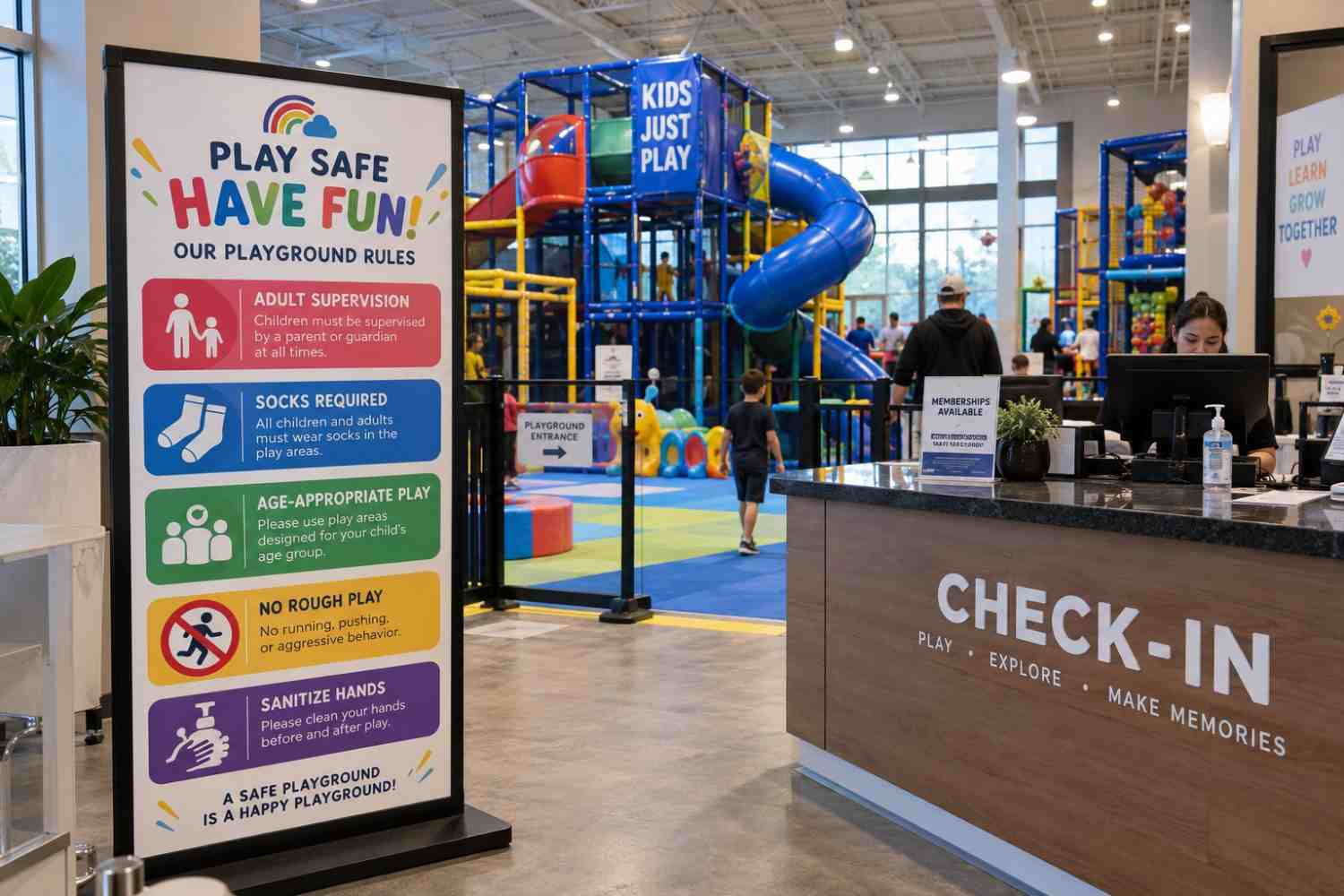
Playground safety signs help kids, parents, and staff keep play time safer and more fun. These signs show clear age limits, play rules, and adult watch needs. They also remind children to take turns, use slides the right way, and stay in safe areas. For parents, signs make it easier to guide children before play starts. At Let’s Play – Hoover, clear rules can help families enjoy active play with more care and confidence.
What are Playground Safety Signs?
Simple Signs that Guide Safe Play
Playground safety signs are clear signs that tell kids and adults how to use a play area. They show what is safe, what is not safe, and what each child should do before play starts. These signs may list rules for slides, swings, climbing areas, and soft play zones. They may also tell kids to walk, take turns, keep hands to themselves, and use each play feature the right way.
Rules and age limits
Many signs show age limits. This helps parents know if a play area fits their child’s size and skill. A space made for toddlers may not be right for older kids. A larger play zone may not be safe for very young children. Clear signs also help families follow the same rules. This can reduce pushing, running, and unsafe climbing. It can also help kids learn how to share a fun space with others.
Warnings and safe play tips
Some signs warn families about wet floors, hot surfaces, closed areas, or play equipment that needs care. Other signs may remind parents to watch their kids at all times. These tips are simple, but they matter. A short rule can stop a small risk before it becomes a real problem. This is why playground safety rules signs are helpful for both kids and adults.
Useful for indoor and outdoor play
Signs are helpful in parks, schools, day care centers, and family fun centers. They are also useful at a kids indoor playground in Hoover, where children may climb, slide, crawl, and explore in one place. Good signs make rules easy to see and easy to follow. They help families enjoy play time with more care, order, and peace of mind.
Why do playground safety signs help kids stay safe?
They show kids what to do
Playground safety signs help kids know how to play in a safe way. Kids can get excited when they see slides, tunnels, and climbing spots. Clear signs remind them to slow down, look around, and follow simple steps. These signs can tell kids to walk instead of run. They can also remind them to wait for their turn. This helps stop bumps, falls, and mix-ups during busy play times.
They teach fair play
Kids learn by seeing and doing. Signs can show them how to share space with others. A rule about taking turns helps each child enjoy the play area. Signs can also remind kids to keep hands and feet to themselves. This helps children play with more care. It also helps parents guide them with simple words.
They guide safe use of play areas
Slides, steps, nets, and climbing zones work best when kids use them the right way. A sign may tell kids to sit feet-first on a slide. It may also tell them not to climb on rails, roofs, or fences. These rules help kids stay in safe areas. They also help them know which spots are made for their age and size.
They help during group visits
Clear signs are helpful when many families visit at the same time. They can support birthday parties, school trips, and fundraising events in Hoover. When rules are easy to see, adults can guide children faster. Good playground safety rules signs also help staff keep the space calm and clear. They do not replace adult care. But they do give kids and adults a simple guide to follow.
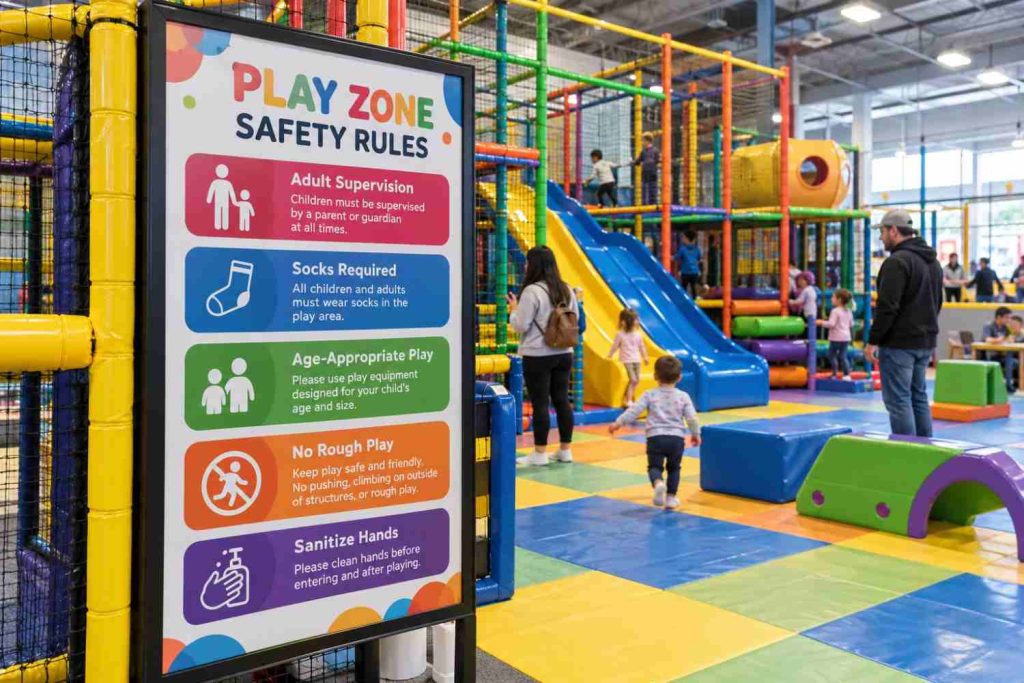
Common types of playground safety signs parents should notice
Age-appropriate use signs
Playground safety signs often show which age group can use each play area. Some spaces fit toddlers. Other spaces fit older kids. These signs help parents guide children to the right spot. They also help kids avoid play areas that may be too big, too high, or too hard for them.
Adult supervision signs
Adult supervision signs remind parents and guardians to watch children while they play. Kids can move fast in busy play spaces. A clear sign helps adults stay alert. It also reminds them that safe play works best when adults stay close and aware.
Behavior and rules signs
Behavior signs show simple play rules. They may tell kids to walk, take turns, wait in line, and use slides feet-first. These signs help children know what to do without long talks. They also help adults correct unsafe play in a calm way.
Prohibition signs
Prohibition signs tell families what is not allowed. These may include no smoking, no glass, no pets, no outside food, or no drinks in play zones. These rules help keep the area clean, safe, and fit for children.
Hazard and warning signs
Warning signs point out things that need care. They may warn about wet floors, closed areas, hot surfaces, or play parts under repair. These signs help families stop, look, and choose a safer path. They also help staff keep kids away from areas that may cause harm.
Hours and contact signs
Hours signs tell families when the play area is open. Contact signs may show where to ask for help. Some signs may also show what to do in an emergency. These details help parents act faster when they need staff support.
Rules parents should read first
Parents should read playground safety rules signs before kids start playing. A quick look can help families know the socks rule, age limits, food or drink rules, and play rules. It also reminds adults to watch kids while they climb, slide, crawl, or run.
This step is useful during regular visits, parties, and holiday activities for kids. When parents know the rules first, they can guide children with clear words. This helps each family enjoy a safer, smoother, and more relaxed visit.
How signs support parents, staff, and safer visits
Signs help adults stay aware
Playground safety signs help parents and staff guide children with clear rules. They do not replace adult care. Parents still need to watch kids as they climb, slide, crawl, and explore.
Signs help adults know what to look for. They may show age limits, safe play steps, sock rules, food rules, or areas that need extra care. This helps parents give quick reminders before small risks grow. Clear signs also help staff keep play areas neat and calm. Staff can point to posted rules when they guide families. This makes the rules easier to understand and follow.
Signs support group visits
Signs matter more when many kids play at the same time. A birthday party, school trip, or Hoover field trip can bring more noise and movement. Posted rules help each group stay on the same page.
Staff can use signs to guide children into the right areas. Parents and teachers can also use them to remind kids about safe play. This helps groups move with more order. When adults and staff share the same rules, children get clear help. They hear the same message from more than one adult. This makes play time safer and less stressful for all.
What parents should check first?
Before play starts, parents should take a few minutes to read the signs. This small step can help prevent confusion. It can also help kids know what to expect.
Look for the main rules near the entrance, play zones, slides, climbing spots, and party areas. These signs may explain which ages can use each space. They may also show where food and drinks are allowed. Good playground safety rules signs should be easy to read. They should use clear words and simple steps. If a rule is not clear, ask staff for help before play begins.
Simple safety checklist before play
Use this short checklist before your visit:
- Read all posted signs before play starts.
- Watch children while they play.
- Follow age and size rules.
- Remind kids to walk, wait, and take turns.
- Keep food and drinks in allowed areas.
- Make sure kids wear required socks.
- Keep personal items in the right place.
- Tell kids to use slides feet-first.
- Keep children away from closed areas.
- Ask staff if a rule is unclear.
Keep the visit smooth and safe
Clear rules help families enjoy more fun with less stress. Parents can guide children in a kind and simple way. Staff can also keep the space clean, safe, and easy to use. A safe visit starts before the first slide or climb. Read the signs, follow the rules, and stay close while kids play. This helps each child enjoy the space with more care and confidence.
Plan a Safer Play Day at Let’s Play Hoover!
Let’s Play Hoover makes family visits easier with clear rules, fun play areas, and helpful staff. Good playground safety signs can help parents guide kids before they climb, slide, or explore. They also help children know how to play with care.
Contact us to plan your next visit, party, or group outing. Our team can help you learn more about play rules, booking steps, waivers, and visit details. Bring the kids, follow the signs, and enjoy a fun play day with more peace of mind.
FAQs
What are playground safety signs?
Playground safety signs are posted signs that show rules, warnings, age limits, and safe play tips. They help kids know what to do. They also help parents guide children before they climb, slide, crawl, or explore.
Why are playground safety signs important?
Playground safety signs help keep play areas safer and more orderly. They remind kids to walk, take turns, and use play zones the right way. They also help parents and staff watch for unsafe actions.
Do playground safety signs replace adult supervision?
No. Signs do not replace adult supervision. Parents and guardians should still watch children during play. Signs only give clear reminders. Adults must still guide kids, answer questions, and step in when needed.
What signs should parents read before kids play?
Parents should read age limit signs, sock rules, food and drink rules, warning signs, and play rules. They should also check signs near slides, climbing areas, party rooms, and entrance points.
How can families prepare for a safer play visit?
Families can read rules before play starts, complete waivers, bring required socks, and watch children during play. They can also ask staff for help if a rule is unclear or if they need visit details.